
Breaking the Fear Cycle: How Fear of Falling Affects Older Adults, and How We Can Help
For many older adults, the fear of falling becomes just as limiting as the fall itself. It’s a quiet, persistent worry that can change how a person moves, behaves, and participates in daily life. While it’s natural to feel cautious, withdrawing from movement altogether can make things worse, not better.
At Guide Healthcare, our therapists see this every day, and we work proactively to identify and break this cycle using evidence-based tools, including the Short Falls Efficacy Scale – International (Short FES-I), and personalised Physiotherapy programs that rebuild strength, confidence, and independence.
Understanding the Fear Cycle
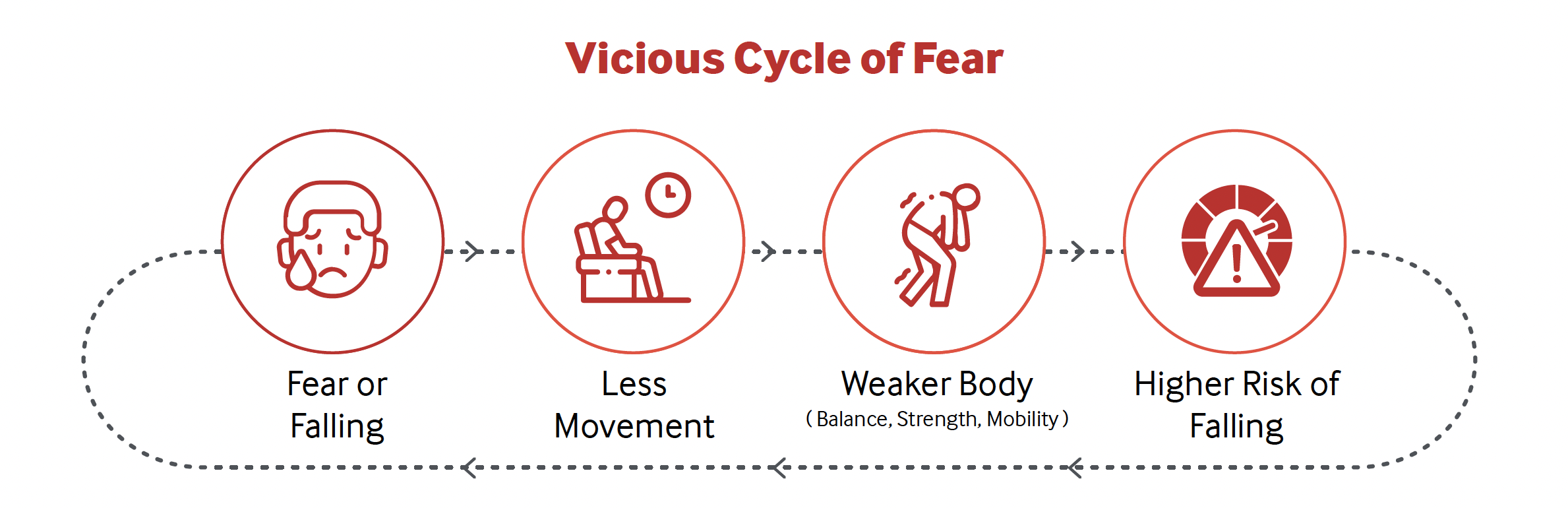
The Vicious Cycle of Fear explained
When fear takes over, it triggers a chain reaction that impacts both physical and mental wellbeing, and many older adults unknowingly fall into this patten.
The Vicious Cycle of Fear can be explained as:
Fear of Falling → Less Movement → Weaker Body → Higher Fall Risk.
What are the triggers:
• Fear of falling often begins after a previous fall, a near miss, or simply noticing physical changes.
• This leads to less movement, avoidance of everyday activities, and reduced engagement with exercise.
• Over time, the body becomes weaker, especially in balance, strength, and mobility.
• The individual then becomes at even greater risk of falling, reinforcing the fear.
Without intervention, the cycle continues to spin, affecting independence, confidence, and quality of life.
How We Identify Fear of Falling
Guide Healthcare clinicians use different tools but one is the; Short FES-I, a validated, evidence-based questionnaire that helps us understand:
• How concerned a person is about falling
• Which activities feel most unsafe or overwhelming
• How the fear is affecting daily living and wellbeing
This assessment gives us clarity. It helps us tailor a program that meets the individual exactly where they are, whether they are highly fearful and avoiding most movement, or simply cautious and needing reassurance and guidance.
Breaking the Cycle: Our Person-Centred Approach
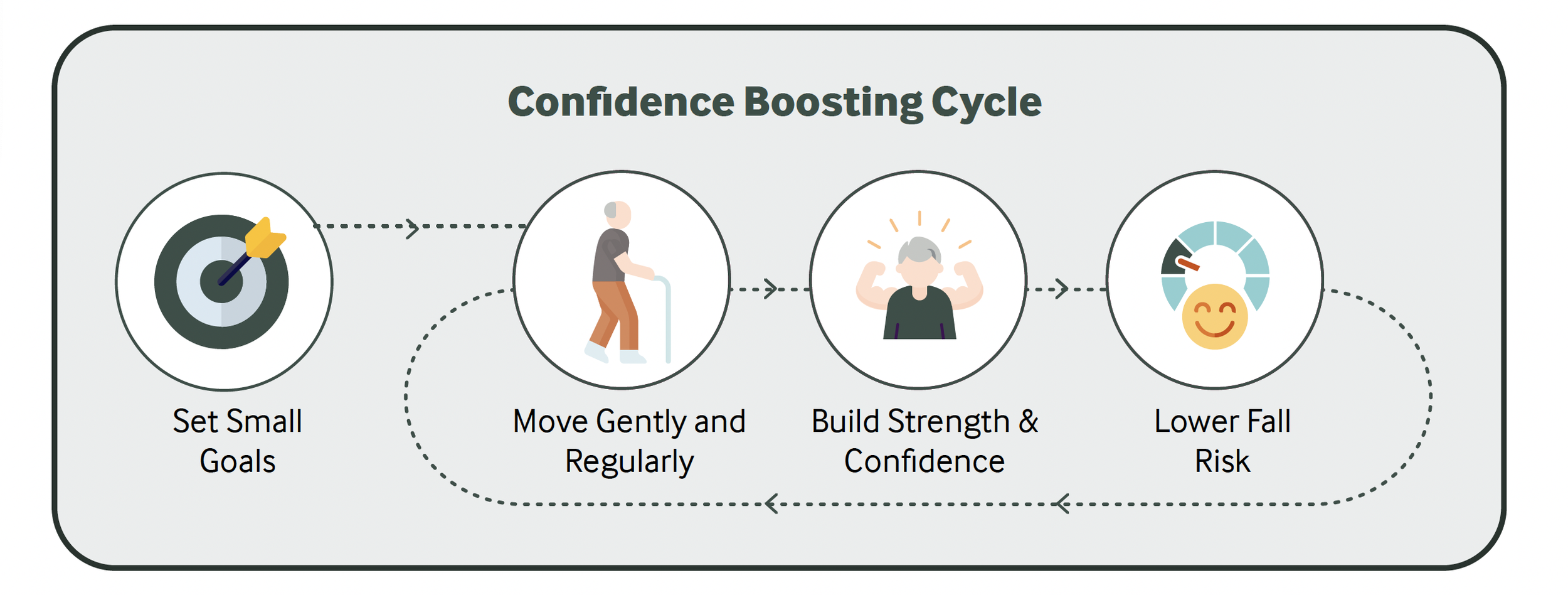
Explanation of the Confidence Boosting Cycle
Once we understand the level of fear and the activities most affected, we work alongside the participant to shift them from the Vicious Cycle into the Confidence Boosting Cycle.
Confidence Boosting Cycle can be explained as:
Set Small Goals → Move Gently & Regularly → Build Strength & Confidence → Lower Fall Risk
Our therapists support participants to:
1. Set small, achievable goals
These might be as simple as:
• Standing every 30 minutes
• Walking to the letterbox
• Practising one balance exercise at the kitchen bench
• Sitting outside for 5 minutes each day
Small wins lead to motivation, and motivation leads to momentum.
2. Move gently and safely
We introduce movement that feels safe, supported, and achievable, such as:
• Seated or supported balance exercises
• Short, supervised walks
• Hydrotherapy for a low-impact option
• Strength-building exercises using bodyweight or light resistance
The goal is to rebuild trust between the person and their body.
3. Build strength and confidence
As strength improves, so does confidence. Participants realise that their body can do more than they thought. This is one of the most powerful turning points in the entire journey.
4. Reduce fall risk
With improved strength, balance, and movement patterns, the participant naturally moves into a lower-risk category. Confidence rises. Engagement increases. Independence returns.
Every person is different, which is why our approach is flexible and responsive.
Why This Matters: Fear of Falling Is Treatable
Fear of falling is extremely common, but it should never be accepted as “part of ageing”. With the right support, older adults can, and do, reclaim their independence.
At Guide Healthcare, our clinicians are trained to:
• Identify fear early using tools such as the Short FES-I
• Work collaboratively with the participant
• Build a graded, safe, and empowering movement plan
• Shift the person from fear-based avoidance to confidence-driven activity
• Improve strength, mobility, and quality of life
Breaking the cycle doesn’t happen in one day, but it does happen through consistent, supported steps.
Fear may hold older adults back, but with the right help, confidence can carry them forward. Our therapists walk alongside each person, offering reassurance, evidence-based strategies, and a clear path toward safer, stronger, more confident mobility.
